PENGGUNAAN MEDIA KOMUNIKASI VISUAL DALAM PENERAPAN METODE PEMBELAJARAN DI SMA TP 45 DENPASAR
DOI:
https://doi.org/10.25078/anubhava.v5i1.3952Keywords:
Visual Communication Media, Learning Methods , Learning Media, Learning Effectiveness, Learning QualityAbstract
Learning media is very necessary in the learning process. One of the existing learning media is visual communication media. This study aims to analyze the use, the obstacles, and the implications and of visual communication media in the application of learning methods at SMA TP 45 Denpasar. This study uses a descriptive qualitative method with data collection techniques through observation, interviews, and documentation in Class XII SMA TP 45 Denpasar, where the data obtained will be analyzed descriptively and interactively. The results of the study show that, first, visual communication media in the application of learning methods is used to increase the effectiveness and quality of learning, as well as to increase student learning motivation; second, there are three obstacles encountered in the use of visual communication media in the application of learning methods, namely physiological obstacles, semantic obstacles, and psychological obstacles; third, the use of visual communication media in learning methods has major implications in increasing the effectiveness of learning. Based on these findings, it can be concluded that the use of visual communication media in the learning process is necessary to increase student motivation and improve the quality and effectiveness of learning. Referring to the conclusions of this study, communication media, which falls within the scope of communication science, is important and deserves special attention because of its role in creating innovative learning media.
References
Angga, P. M. W., Sudarma, I. K., & Suartama, I. K. (2020). E-Komik Pendidikan untuk Membentuk Karakter dan Meningkatkan Hasil Belajar Siswa Kelas V pada Mata Pelajaran Bahasa Indonesia. Jurnal Edutech Undiksha, 8(2), 93–106. https://doi.org/10.23887/jeu.v8i2.28920
Asikin, Z. (2024). Efektivitas Media Visual dalam Meningkatkan Pemahaman Konsep Biologi di Sekolah Menengah Atas. Jurnal Ilmiah IPA dan Matematika (JIIM), 2(1), 12–16. https://doi.org/10.61116/jiim.v2i1.467
Dewi, A. A. S., Sudarma, I. K., & Tegeh, I. M. (2022). Video Pembelajaran pada Muatan Pembelajaran IPA untuk Siswa Kelas V Sekolah Dasar. Indonesian Journal of Instruction, 3(1), 1–14. https://doi.org/10.23887/iji.v3i1.31272
Dimbleby, R., & Burton, G. (1998). More than Word: An Introduction to Communication. London: Routledge.
Haka, N. B., Makrupah, S., & Anggoro, B. S. (2020). Pengembangan Website Online Berbasis Blended Learning untuk Meningkatkan Penguasaan Konsep Mata Pelajaran IPA. Jurnal Bioterdidik: Wahana Ekspresi Ilmiah, 8(1), 66–76. http://jurnal.fkip.unila.ac.id/index.php/JBT/article/view/20782
Hulu, D. M., Pasaribu, K., Simamora, E., Waruwu, S. Y., & Cici, F. B. (2022). Pengaruh Penggunaan Media Visual terhadap Hasil Belajar Siswa. Jurnal Kewarganegaraan, 6(2), 2580–2586. https://doi.org/10.31316/jk.v6i2.3056
Kriyantono, R. (2020). Teknik Praktis Riset Komunikasi Kuantitatif dan Kualitatif. Jakarta: Kencana.
Listiaji, P., Maryanto, H., Sugiyanto, S., & Susanto, H. (2019). Pengembangan Aplikasi Mobile Smartphone Berbasis Android Sebagai Pendukung Pembelajaran Fisika SMA Materi Hukum Gravitasi Newton. Jurnal WaPFi (Wahana Pendidikan Fisika), 4(2), 216–223. https://doi.org/10.17509/wapfi.v4i2.15365
Mahmudi, M. (2010). Manajemen Kinerja Sektor Publik. Yogyakarta: UPP STM YKPN.
Miarso, Y. (1984). Teknologi Komunikasi Pendidikan. Jakarta: Rajawali.
Mustakim, M. (2020). Efektivitas Pembelajaran Daring Menggunakan Media Online selama Pandemi Covid-19 pada Mata Pelajaran Matematika. Al-Asma: Journal of Islamic Education, 2(1), 1–12. https://doi.org/10.24252/asma.v2i1.13646
Nurfaizi, M., Ramdhan, B., & Juhanda, A. (2022). Efektivitas Media Augmented Reality Berbasis Smartphone terhadap Kompetensi Komunikasi Visual dan Motivasi Siswa dalam Pembelajaran Biologi. BIODIK: Jurnal Ilmiah Pendidikan Biologi, 8(3), 99–109. https://doi.org/10.22437/bio.v8i3.18857
Pujileksono, S. (2015). Metode Penelitian Komunikasi Kualitatif. Malang: Kelompok Intrans Publishing.
Raharjo, R. (1984). Media Pendidikan. Jakarta: Ciputat Pers.
Rohim, S. H. (2016). Teori Komunikasi: Perspektif, Ragam, dan Aplikasi. Jakarta: Rineka Cipta.
Sanjaya, W. (2006). Strategi Pembelajaran Berorientasi Standar Proses Pendidikan. Jakarta: Kencana Prenadamedia Group.
Sudjana, N., & Rivai, A. (1991). Media Pengajaran. Bandung: Sinar Baru.
Sumarni, W., Soeprodjo, S., & Rahayu, K. P. (2009). Efektivitas Penerapan Metode Kasus Menggunakan Media Audio-Visual terhadap Hasil Belajar Kimia Siswa SMA. Jurnal Inovasi Pendidikan Kimia, 3(1), 345–353. https://doi.org/10.15294/jipk.v3i1.1264
Wedayanti, L. A., & Wiarta, I. W. (2022). Multimedia Interaktif Berbasis Problem Based Learning pada Muatan Matematika Kelas IV SD. Jurnal Mimbar PGSD Undiksha, 10(1), 113–122. https://doi.org/10.23887/jipgsd.v10i1.46320
Widjaya, I. N., & Musha, R. I. (2022). Hambatan Komunikasi Melalui Berbagai Media Pembelajaran dalam Pembelajaran Jarak Jauh dari Perpsektif Siswa. Syntax Literate: Jurnal Ilmiah Indonesia, 7(10), 16850–16866. https://doi.org/10.36418/syntax-literate.v7i10.12959.
Downloads
Published
Issue
Section
License
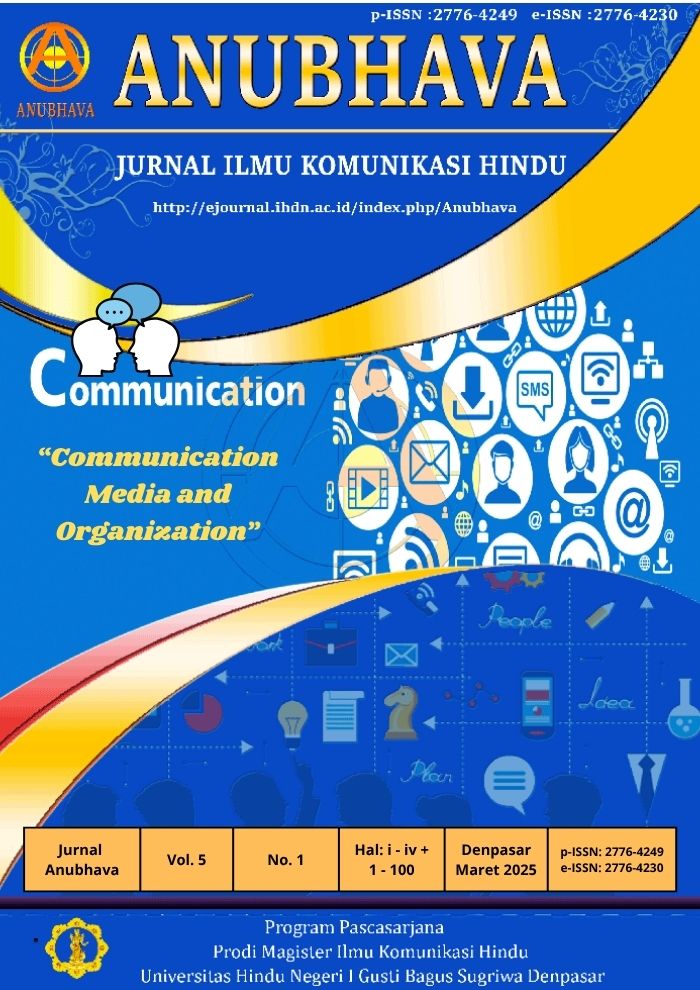
Copyright (c) 2025 Anubhava: Jurnal Ilmu Komunikasi HIndu

This work is licensed under a Creative Commons Attribution-NonCommercial-NoDerivatives 4.0 International License.
Anubhava: Jurnal Komunikasi Hindu is licensed under a Creative Commons Attribution-ShareAlike 4.0 International License. Permissions beyond the scope of this license may be available at Anubhava: Jurnal Ilmu Komunikasi